
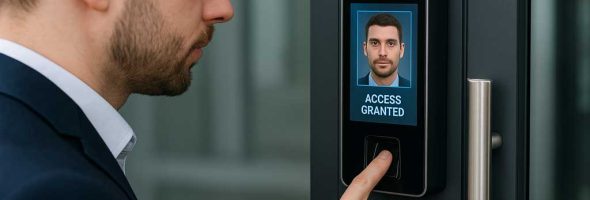
Biometric access control has moved quickly from science fiction to everyday business security, giving organisations a smarter way to manage who can go where and when. As cyber and physical threats increase, many UK companies are now reviewing whether traditional keys and swipe cards are still enough. If you are rethinking your building security or time and attendance processes, it may be time to ask: what is biometric access control and do you really need it for your business?
What Is Biometric Access Control?
In simple terms, biometric access control is a system that uses someone’s unique physical or behavioural traits to decide whether to let them in. Instead of presenting a key, card or PIN, a person uses a fingerprint, face, iris, palm or voice pattern that is checked against a secure stored template.
If there is a match, the door, turnstile or system unlocks; if not, access is denied. Because these identifiers are tied to the individual and are very difficult to copy, biometric access control offers a highly accurate way to verify identity.
How Do Biometric Access Systems Work Day To Day?
Biometric access control starts with enrolment, where an employee’s fingerprint, facial image or other characteristic is scanned and converted into a digital template stored in the access control database. When they later present their finger or face at a reader on site, the system captures a fresh scan and compares it to that template in a fraction of a second.
If the two match within an acceptable threshold, the system grants access based on that person’s permissions, logging who entered, where and at what time. This behind-the-scenes process gives you a clear audit trail of every access attempt across your estate.
Key Business Benefits Of Biometric Access Control
For UK organisations, biometric access control can deliver a range of practical benefits.
- Stronger security: Because fingerprints, facial patterns and iris details are unique and extremely hard to forge, the risk of unauthorised access is significantly reduced compared with shared codes or stolen cards.
- No more lost cards or keys: Staff do not need to carry tokens or remember PINs, which cuts the time and cost of issuing replacements.
- Better time and attendance data: Biometric readers can accurately track who is on site and when, helping tackle time theft and improving payroll accuracy.
- Faster movement through your building: Quick biometric checks help avoid bottlenecks at turnstiles and doors, especially at shift changes or peak times.
- Enhanced compliance and audit support: Detailed access logs support security investigations and regulatory audits where you must prove exactly who accessed sensitive areas.
Are There Any Drawbacks Or Concerns?
While biometric access control is powerful, it is not completely without challenges. The most obvious concern is privacy: you are collecting and processing biometric data, which counts as sensitive personal data under UK data protection law. You will need clear policies, secure storage and robust consent or legitimate-interest grounds to stay compliant.
There can also be environmental or usability issues; for example, some fingerprint readers struggle with dirty, wet or worn fingerprints, while facial recognition can be affected by poor lighting or PPE. Working with a specialist provider who understands your environment will help you choose the right biometric technologies and design a user-friendly system.
Does Your Business Really Need Biometric Access Control?
Not every organisation needs biometric access control, but many can benefit. You are more likely to need it if you operate in sectors with high security or compliance requirements, such as critical infrastructure, data centres, healthcare, finance or manufacturing. It is also a strong fit if you have valuable on-site assets, large workforces or multiple locations where keys and cards are hard to manage.
On the other hand, a very small office with a handful of staff in a low‑risk setting may find that a well-managed card system remains sufficient. In many cases, the best answer is a hybrid approach that combines biometric access control for high‑risk doors and traditional methods elsewhere, all managed through a single central platform.
Next Steps For Improving Your Access Security
If you are questioning whether your current access control still offers the level of protection and visibility your business needs, biometric access control is worth serious consideration. Start by reviewing your existing risks, regulatory obligations and pain points around keys, cards or attendance, then speak to a specialist provider who can recommend a solution tailored to your premises, workforce and budget. The right system will not just tighten security; it can streamline operations, support compliance and give you far greater confidence in who is accessing your buildings.
Featured image: AI generated.